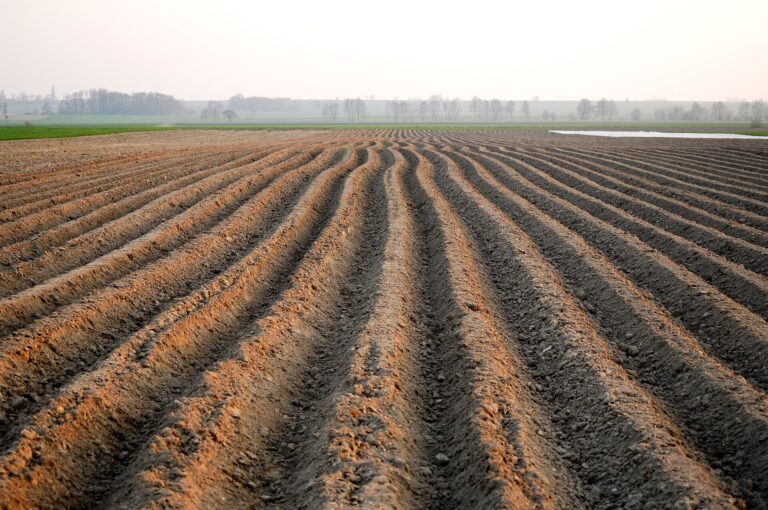
Belarus: Lukashenko Sets 3.3 Million-Tonne Potato Target for 2026, Calls for More Area and Exports

Prìomh takeaways
- 3.3 million t of potatoes is the Belarus target for 2026
- 0.88 million t is expected from farms and agri enterprises
- 70% of Belarusian potatoes come from household plots
- 28% of the planned area had been harvested by 18 September
Carson a tha e cudromach
- Do thuathanaich
- Belarusian commercial farms expanding area should secure certified seed early; the president tied expansion to domestic seed supply.
- Do luchd-malairt
- Buyers in Russia and Uzbekistan may see more Belarusian offers; watch export arrangements the government is told to develop.
Geàrr-chunntas 60-diog
Alexander Lukashenko used a visit to a Mogilev-region farm to demand that Belarus plant more potatoes and sell them abroad. The government has been told to line up buyers, with Russia and Uzbekistan cited as proven outlets, and to make sure there is enough home-grown seed to support expansion. Official plans foresee a national crop of 3.3 million tonnes this year, up 0.3 million, of which about 0.88 million tonnes should come from agricultural enterprises and farms; household plots produce roughly seven tenths of the total. By 18 September, lifting had covered 28 per cent of planned fields, 212,000 tonnes at about 34 tonnes per hectare, led by the Mogilev region. The 3.3 million tonnes remains a plan, and the exportable commercial share is far smaller. The export drive also sits uneasily with this month's cap on domestic off-season prices.
Belarusian President Alexander Lukashenko called on 18 September for a larger potato area in Belarus and instructed the government to find new sales markets, state news agency BelTA and regional media reported.
Speaking at the peasant farm “Diana” in the Shklov district of the Mogilev region, Lukashenko said Belarus must grow more potatoes. He named Russia and Uzbekistan as markets with known demand and said enough domestic seed tubers must be secured for expansion.
According to BelTA, the 2026 target is 3.3 million tonnes of potatoes, 0.3 million tonnes more than last year. Agricultural organisations and peasant farms are expected to contribute 0.88 million tonnes, 47,800 tonnes more than a year earlier. About 70% of Belarusian potato production comes from household plots rather than commercial farms.
Làithean na seachdain. Dì-chlàraich le aon bhriogadh.
BelTA’s harvest bulletin of 18 September said potatoes had been lifted from 28% of the planned area, with 212,000 tonnes dug at an average yield of 340 centners per hectare (34 t/ha). The Mogilev region led with 69,000 tonnes.
The agency also noted that 147 Belarusian potato varieties have been developed and submitted to state variety testing since 1939.
The 3.3 million tonnes is a plan figure, not a harvest result. The large share of household plots means that commercial output — the part that can be exported — is much smaller than the national total.
Earlier this month the Belarusian government capped potato prices for the 2026/27 off-season (leugh barrachd). The president’s call for exports and the domestic price cap point in different directions: one seeks new markets abroad, the other protects consumers at home.
Carson a tha e cudromach
A state-led push to expand Belarusian potato area and exports would add supply to the Russian and Central Asian markets, where Kazakhstan and other suppliers already compete. With household plots producing most of the crop, the scale of any export increase will depend on how far commercial farms expand their area and secure seed.
Dealbh: Villagers with a potato planter in Klepachi, Belarus (illustrative). Викиникос / Wikimedia Commons, CC BY-SA 4.0
Geàrr-chunntas Buntàta Cruinneil
Còig prìomh sgeulachdan, prìsean, rabhaidhean galair agus tachartasan. Madainnean làithean seachdaineach, gun sanasachd.
Dè a-nis
The government must find sales markets and secure domestic seed; the 3.3 Mt target is a plan figure, with the harvest still under way.
stòran
- БелТА (урожай на 18.09) — https://belta.by/economics/view/kartofel-v-belarusi-ubrali-s-28-zaplanirovannyh-ploschadej-801680-2026/
- БелТА (визит президента) — https://belta.by/president/view/lukashenko-na-kartofelnom-pole-pogovoril-po-dusham-s-fermerom-spojler-ochen-zhiznenno-801792-2026
- Mlyn.by — https://mlyn.by/18092026/bolshe-ploshhadej-i-novye-rynki-chto-lukashenko-poruchil-sdelat-s-belorusskim-kartofelem/
- Slavgorod.by — https://www.slavgorod.by/2026/09/18/v-grafike-prezidenta-selhoztematika-aleksandr-lukashenko-sovershil-rabochuyu-poezdku-v-shklovskij-rajon/
- The 3.3 Mt figure is a state plan, not a harvest result.
Ceangailte san stuth seo
- dùthaich
- Beloruisia
- Earrannan
- Roinn EòrpaBuainNaidheachdan- HUASHIL
Sgeulachdan co-cheangailte
An Roinn Eòrpa: Clòn Blight Late EU_36 a’ tuiteam gu 34% de shampaill fhad ‘s a tha EU_43 a tha an aghaidh galairean a’ dol suas gu 12%
An Ungair: Tha an sgìre buntàta a’ tuiteam gu timcheall air 5,065 heactair, deicheamh cuid de na h-ìrean anns na 1990an