Cruinneil: Gearraidhean air spraeadh ola mèinnearach PVY Sgaoileadh ann am buntàta sìol le 43–58% ann an deuchainnean achaidh
Prìomh takeaways
- 43-58% cut in PVY incidence from mineral oil in Finland
- 50-70% cut in PVY from straw mulch in Finnish small plots
- 4% PVY spread with oil plus insecticide vs 18% untreated
- 6 years of Belgian trials confirm oil works but not fully
Carson a tha e cudromach
- Do thuathanaich
- Start with low-PVY seed, begin oil sprays early and keep them going during aphid flights; add straw mulch or early haulm kill where possible.
- Do sholaraichean
- Offer seed growers complete PVY programmes: mineral oil plus insecticide partners, mulching options and timing advice.
Geàrr-chunntas 60-diog
Controlling potato virus Y in seed crops takes a combination of tools, not one spray. Trials in three countries tell a consistent story. In Finland, mineral oil lowered infection by 43 to 58% in two seasons, while straw mulch did even better at 50 to 70% in small plots. In New Brunswick, plots sprayed with oil plus an insecticide held spread to between 4 and 12%, compared with 18 to 22% in untreated ground, whereas insecticide on its own made no significant difference. A six-year Belgian programme adds that early haulm killing lowers virus levels in seed lots and that rapeseed oil is weaker than mineral oil. Seed producers, agronomists and suppliers of oils and mulching equipment should read these results as a case for layered programmes starting from clean seed. Caveat: results vary with aphid pressure, and none of the methods gave complete protection.
Mineral oil sprays remain one of the main tools to slow the spread of potato virus Y (PVY) in seed crops. Several peer-reviewed field studies have measured their effect. The results are good, but protection is never complete.
Finland: oil and straw mulch
Kirchner and colleagues tested four methods over three years in the High Grade seed area of Finland. Their results were published in Potato Research in 2014. Mineral oil reduced PVY incidence by 43–58% in two of the years.
Straw mulch performed even better. It cut PVY incidence by 50–70% in all three years in small-scale trials. At farm level, the reduction was 25–47% over two years. The insecticide esfenvalerate reduced PVY in progeny tubers by 29%, but only in one of three years. Birch extract had no significant effect.
Làithean na seachdain. Dì-chlàraich le aon bhriogadh.
Canada: oil plus insecticide
MacKenzie and colleagues ran trials in New Brunswick in 2014 and 2015. Their paper appeared in the American Journal of Potato Research. In untreated plots, PVY spread to 18% of virus-free plants in 2014 and 22% in 2015.
Combined sprays of mineral oil and insecticide gave the best results. Spread fell to as low as 4% in 2014 and 12% in 2015. Mineral oil alone also reduced spread significantly, but less. Insecticide alone did not significantly reduce PVY spread. The authors stress the importance of planting low-PVY seed and spraying early.
Belgium: six years of data
Rolot, Seutin and Deveux ran a six-year trial in the Ardenne region of Belgium. Their paper appeared in Potato Research in 2021. They conclude that mineral oil is efficient against PVY spread, although protection is incomplete.
Systemic insecticides mixed with oil gave added protection when winged aphid activity was high. Straw mulch increased the effect of oil and may reduce the number of sprays needed. Early haulm killing reduced PVY in seed lots. Rapeseed oil gave lower protection than mineral oil. Plant slurries and a silicon product did not control PVY.
Carson a tha e cudromach
In seed production, virus levels decide the class of a seed lot. The studies agree on three points. Mineral oil works but is incomplete. Insecticide alone is weak. Combinations of oil with mulch, insecticide or early haulm killing work best.
For seed growers, the first line of defence is clean starting seed. Oil programmes should start early and continue while aphids fly.
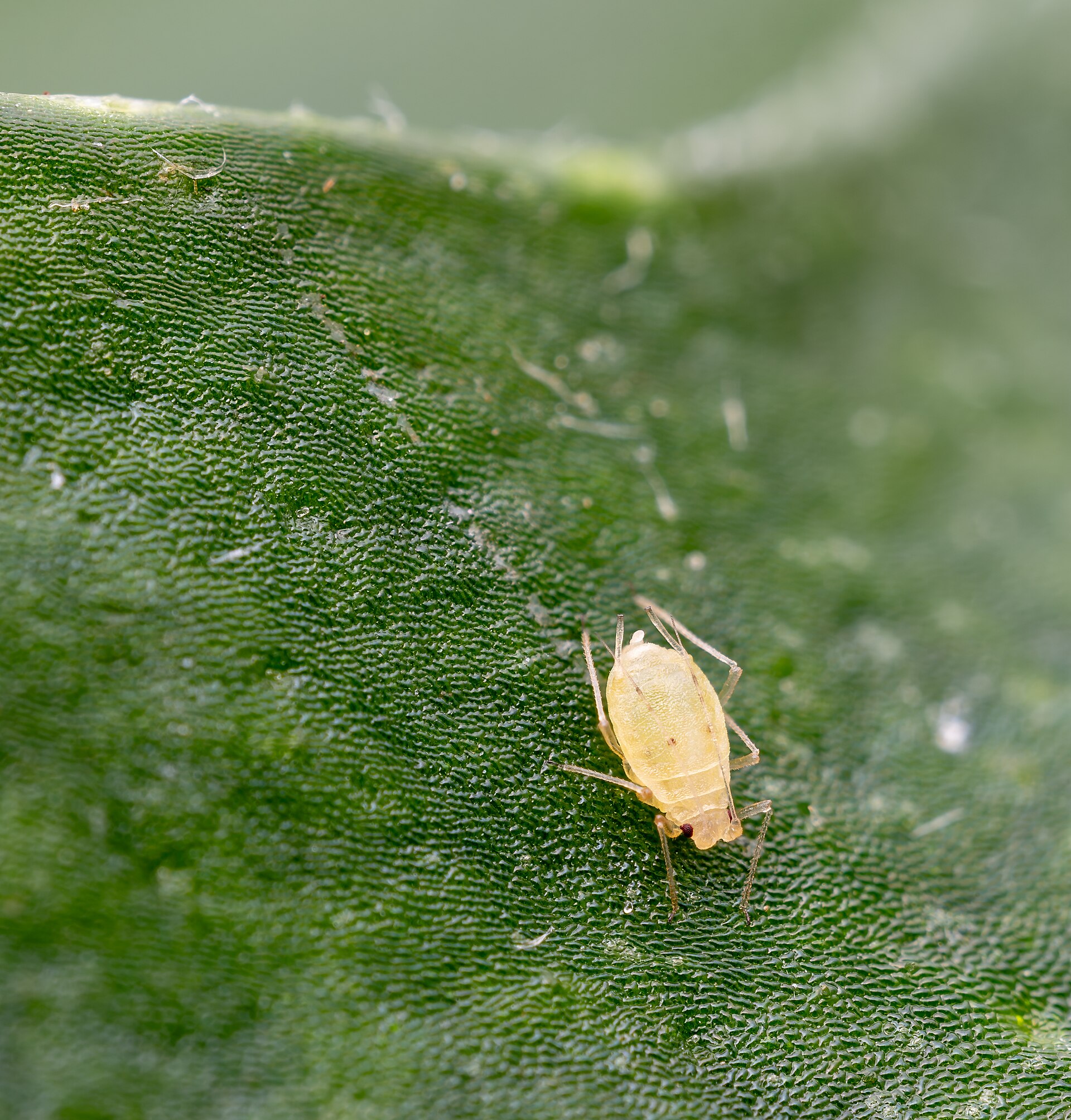
Photo: Green peach aphid (Myzus persicae) on a leaf (illustrative). Jules Verne Times Two / Wikimedia Commons, CC BY-SA 4.0
Geàrr-chunntas Buntàta Cruinneil
Còig prìomh sgeulachdan, prìsean, rabhaidhean galair agus tachartasan. Madainnean làithean seachdaineach, gun sanasachd.
stòran
- Kirchner et al., Potato Research, 2014 — https://link.springer.com/article/10.1007/s11540-014-9254-4
- MacKenzie et al., American Journal of Potato Research, 2017 — https://link.springer.com/article/10.1007/s12230-016-9550-4
- Rolot, Seutin, Deveux, Potato Research, 2021 — https://link.springer.com/article/10.1007/s11540-020-09485-7
Ceangailte san stuth seo
- dùthaich
- an t-Saoghail
- Earrannan
- Naidheachdan- HUASHILSìolСrop dìon
Sgeulachdan co-cheangailte
Na Tìrean Ìsle: Bidh neach-fàs sìol Friesland a’ cumail Annabelle glan airson còig ginealaichean às aonais minitubers
Prìsean buntàta cruinneil, seachdain 39: Tha an Roinn Eòrpa a’ daingneachadh air bàrr goirid fhad ‘s a tha Àisia fhathast ro-sholaraichte