Serbia: Growers Say Imports Now Cover About 40% of Potato Needs as Local Area Shrinks

Prìomh takeaways
- 40% of Serbia's potato needs are covered by imports
- 500,000–600,000 t is the estimated domestic output
- 70,000–80,000 t can be lost each year in Serbian storage
- 45–50 dinars per kg is the current farm-gate price
Carson a tha e cudromach
- Do thuathanaich
- Serbian growers with storage should cut losses first: 70,000–80,000 t a year lost in store is volume that importers fill.
- Airson luchd-giullachd
- Serbian processors dependent on imported raw material should lock in volumes early, as exporting countries face their own shortfall.
- Do luchd-malairt
- Importers relying on Belgian, Dutch and French supply should budget for higher landed prices this winter as those markets tighten.
Geàrr-chunntas 60-diog
Serbian growers say their country has quietly become a potato importer. The Plodovi Srbije association estimates that imports, mostly Belgian, Dutch and French, cover around 40 per cent of consumption, while home production of half a million tonnes or a little more loses up to 80,000 tonnes in store. Upland farms report 25 to 30 tonnes per hectare this year, an improvement on the weak 2025 harvest in the same areas. Farmers get 45 to 50 dinars per kilogram and shoppers pay about twice that; an agro-economist puts costs at up to one million dinars per hectare. The numbers are association and expert statements, not official data, and a national area figure printed by two outlets does not add up, so it has been left out. Because the named supplier countries have themselves lost volume to drought, imported potatoes could get dearer in the Balkans over the winter.
Serbia now covers about 40% of its potato needs with imports, mainly from Belgium, the Netherlands and France, according to Ratko Vukićević, president of the growers’ association Plodovi Srbije. He told Serbian media on 21 September that the country is now “on the list of potato importers”.
Vukićević said this year’s crop is better than last year’s, with yields of 25–30 tonnes per hectare in hilly areas. Domestic production is estimated at 500,000–600,000 tonnes a year, of which 70,000–80,000 tonnes can be lost in storage, he said.
Growers are receiving 45–50 dinars per kilogram at the farm gate, while potatoes sell in shops for about 100 dinars or more. Agro-economist Žarko Galetin put production costs at 800,000 to one million dinars per hectare.
Làithean na seachdain. Dì-chlàraich le aon bhriogadh.
The daily Danas framed the story around shrinking potato areas, which growers blame on imports sold at what they call dumping prices. Both Danas and Nova Ekonomija also printed a national area figure, but that number is inconsistent with the stated output and is not used here.
The figures quoted are statements by the association and an independent economist rather than official statistics. Serbia’s statistical office has not published a 2026 potato estimate in the sources reviewed.
The three suppliers named by Vukićević — Belgium, the Netherlands and France — are among the countries whose own 2026 harvest has been cut by drought. potatoes.news has reported on the resulting price rises in the Netherlands and Germany (PotatoNL quotation). A shortage in the exporting countries is likely to make imported potatoes more expensive for Balkan buyers later in the season.
At the prices quoted, shoppers pay roughly twice what growers receive at the farm gate.
Carson a tha e cudromach
A country that relies on north-west Europe for two-fifths of its potatoes is exposed when that region runs short. With storage losses already high, Serbian consumers and processors could pay more this winter, while local growers argue for support to rebuild area.
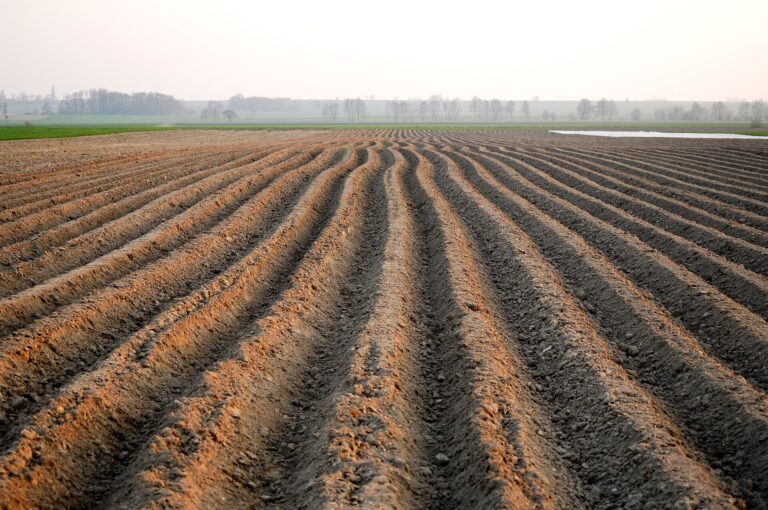
Dealbh: Farmland of Vojvodina, Serbia, seen by the Sentinel-2A satellite (illustrative). ESA / Copernicus Sentinel-2A / Wikimedia Commons, CC BY-SA 3.0 IGO
Geàrr-chunntas Buntàta Cruinneil
Còig prìomh sgeulachdan, prìsean, rabhaidhean galair agus tachartasan. Madainnean làithean seachdaineach, gun sanasachd.
Dè a-nis
No official 2026 estimate is available; growers are pressing for measures against low-priced imports.
stòran
- Danas — https://www.danas.rs/vesti/ekonomija/smanjuju-se-povrsine-pod-krompirom-zbog-uvoza-po-damping-cenama/
- Nova Ekonomija — https://novaekonomija.rs/vesti-iz-zemlje/vukicevic-plodovi-srbije-rod-krompira-bolji-nego-prosle-godine-ali-ce-uvoz-ipak-biti-neophodan
- Agrosmart — https://agrosmart.net/2026/09/21/krompir-evropa-cena-250-evra-srbija-uvoz/
- Figures are statements by the Plodovi Srbije association and an agro-economist, not official statistics.
Ceangailte san stuth seo
- dùthaich
- An t-Sèarb
- Companaidhean
- Plodovi Srbije
- Earrannan
- Roinn EòrpaNaidheachdan- HUASHIL
Sgeulachdan co-cheangailte
An Roinn Eòrpa: Clòn Blight Late EU_36 a’ tuiteam gu 34% de shampaill fhad ‘s a tha EU_43 a tha an aghaidh galairean a’ dol suas gu 12%
An Ungair: Tha an sgìre buntàta a’ tuiteam gu timcheall air 5,065 heactair, deicheamh cuid de na h-ìrean anns na 1990an